
California's Proposed 25% Contingency Fee Cap, Explained
By Adam Kocaj · April 29, 2026
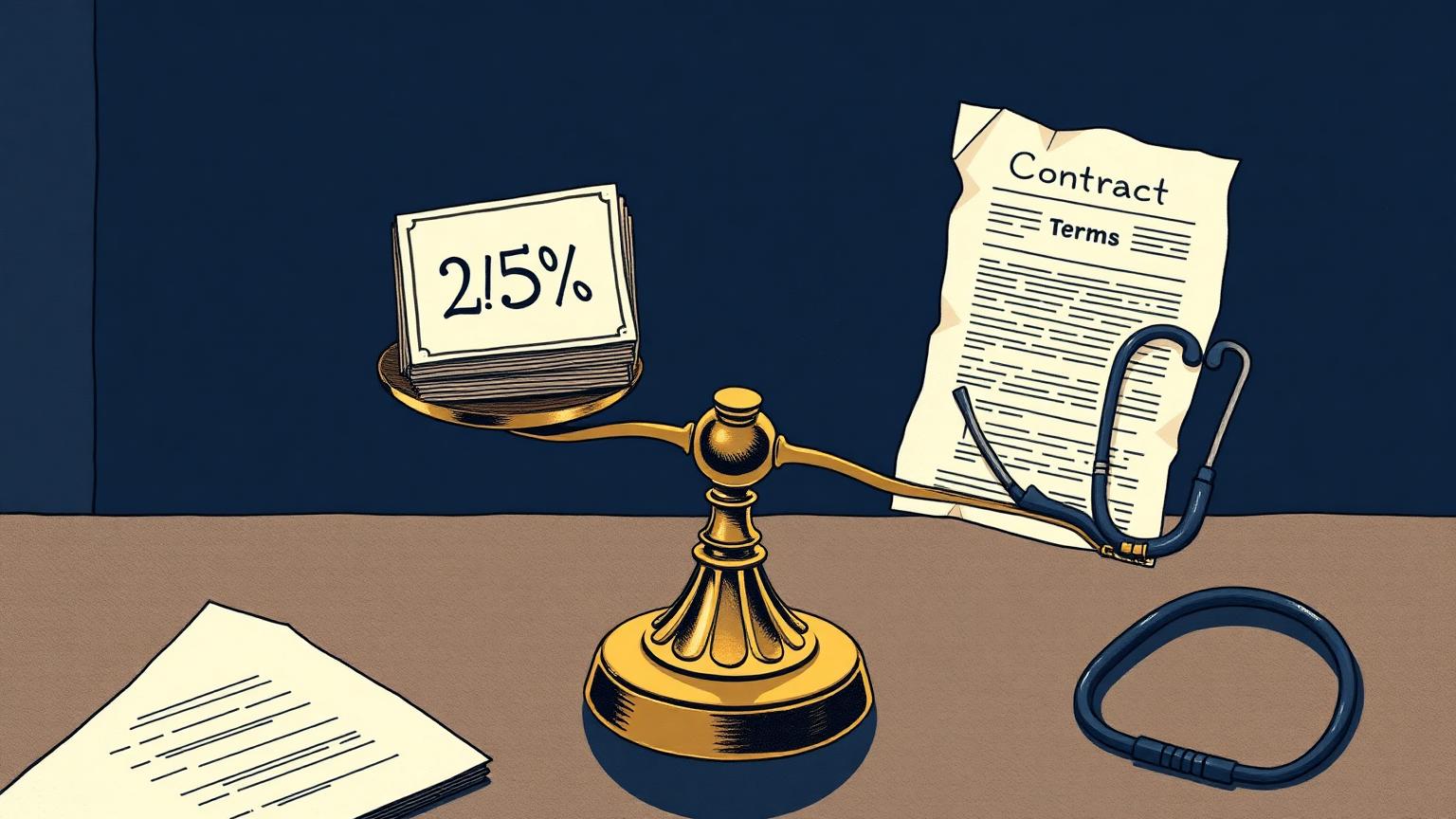
When people hear "25% contingency fee cap," most assume it is a simple consumer protection: less money to lawyers, more money to victims. The reality of California Initiative 25-0022 is more complicated. The cap is one-sided, it is constitutional rather than statutory, and the math of taking a serious injury case is more fragile than the slogan suggests.
This post explains what the proposed 25% rule actually says, how it differs from the contingency-fee rules already on the books in California, and what it would mean in practice for an injured Californian trying to hire a lawyer after a crash.
What does the proposed 25% contingency fee cap actually say?
Initiative 25-0022 — officially titled by Attorney General Rob Bonta as "Limits Automobile Accident Victims' Recovery of Medical Expenses and Fees Their Attorneys May Receive. Initiative Constitutional Amendment." — would amend the California Constitution to require that, in motor-vehicle accident cases, the injured client retains at least 75% of the monetary recovery after costs.
In fee terms, that translates to a maximum attorney fee of approximately 25% of the net recovery. The cap is hard. It cannot be waived by the client, and the Legislature could not adjust it without sending another measure back to the voters.
The cap applies only to plaintiffs' attorneys in motor-vehicle accident cases. It does not apply to:
- Defense lawyers hired by Uber, insurers, trucking companies, or rideshare platforms.
- Plaintiffs' lawyers in non-motor-vehicle cases (premises, product liability, medical malpractice).
- Hourly arrangements outside the auto-accident contingency context.
How is this different from existing California contingency fee rules?
California already regulates contingency fees, but it does so through statute and professional rules — not through a constitutional ceiling.
California Business and Professions Code §6147 requires that contingency-fee agreements be in writing, that they disclose how fees are calculated, and that they explain the client's right to negotiate. Courts have authority to review fees for reasonableness.
In medical malpractice cases, MICRA (Civil Code §3333.2 and §6146) imposes a sliding-scale cap on contingency fees that decreases as the recovery grows. That structure is statutory, narrow to malpractice, and has been on the books since 1975.
Standard contingency fees in everyday auto-accident cases are typically 33⅓% of the recovery before a lawsuit is filed and up to 40% if the case proceeds to trial. Those numbers are not set by statute; they are set by market practice and by the written fee agreement.
Initiative 25-0022 would replace that market structure with a flat constitutional cap for one type of case, paid only by one side of the courtroom.
Why does the 25% number matter for serious injury cases?
A contingency-fee firm is not just charging a fee; it is also acting as the bank for the case. The firm advances the costs of expert witnesses, accident reconstruction, deposition transcripts, medical record subpoenas, exhibit preparation, mediation fees, and trial expenses. Those costs are recovered only if the case wins.
In a moderate auto-accident case with clear liability and a $150,000 recovery, a 25% net cap is workable. In a catastrophic injury case with disputed liability — for example, a multi-vehicle freeway crash involving a commercial driver, an uninsured motorist, and a contested traumatic brain injury — costs can exceed $100,000 before trial. The realistic recovery may also be larger, but the risk of losing is real, and the risk is borne entirely by the firm.
When the constitutional ceiling on the firm's share narrows, two things tend to happen. Firms become more selective about which cases they take. And cases at the margin — soft-tissue, contested liability, low policy limits, hard-to-prove future medical needs — get declined.
Does the cap apply to Uber, insurers, and corporate defendants?
No. This is the asymmetry critics keep pointing to.
The text of Initiative 25-0022 limits the fees plaintiffs' attorneys may receive. Defense counsel — the lawyers paid by Uber, by insurance carriers, by trucking companies, by self-insured employers, or by government entities — can be paid by the hour, on retainer, or under any other arrangement those defendants choose. There is no constitutional ceiling on the defense side.
The California Secretary of State's December 10, 2025 release puts it directly: the measure would "limit the fees such attorneys may receive so victims retain at least 75% of their monetary recovery, but does not restrict fee arrangements for defendants' attorneys."
That one-sided design is why the measure is sometimes described as a corporate liability shield rather than a fee reform.
Is there a real problem with attorney "self-dealing" in California auto cases?
Yes — but the existing tools to address it are narrower than a constitutional fee cap.
Kickbacks between lawyers and medical providers are already illegal under California Business and Professions Code §650, and improper referral arrangements can be the basis for State Bar discipline. Inflated medical liens and "letter-of-protection" abuses have drawn legitimate scrutiny in the rideshare and freeway-accident context.
A targeted statute aimed at specific kickback structures, lien abuses, or undisclosed financial relationships between lawyers and providers would be a narrower way to address those problems. Initiative 25-0022 does include kickback prohibitions — but it bundles them with a constitutional fee cap and a separate set of medical-damages limits that affect ordinary, honest crash victims as well.
What happens to my fee agreement if the measure passes?
For cases filed before the effective date of the measure, current law continues to apply. The text of Initiative 25-0022 is forward-looking; it does not retroactively rewrite existing fee agreements or pending settlements.
For cases filed after the effective date, contingency-fee agreements in motor-vehicle accident matters would need to comply with the 75/25 floor written into the California Constitution. Existing agreements with higher percentages would be unenforceable to the extent they exceed the constitutional cap.
At our firm we follow this issue closely because it directly affects the cases Californians can bring after a crash. We have written a broader piece on the Uber-backed initiative as a whole, and a companion piece answering whether you can still hire a personal injury lawyer in California if Initiative 25-0022 passes.
The bottom line
A 25% contingency fee cap sounds simple. The text of Initiative 25-0022 is not.
It is a one-sided constitutional rule that applies only to plaintiffs in motor-vehicle accident cases, that bundles a fee cap with new medical-damages limits, and that leaves Uber, insurance carriers, and other defendants free to spend whatever they want on their own lawyers.
Voters who care about consumer protection should read the Attorney General's official title and summary before signing any petition.
Disclaimer: This post is for general information only and is not legal advice. The proposed measure is Initiative 25-0022A1; voters should review the official Secretary of State, Attorney General, and campaign finance materials before signing any petition or voting.
Source story
California Secretary of State: Read the original article →
Disclaimer: This commentary is provided for informational purposes only and does not constitute legal advice or commentary on any specific pending case. No attorney-client relationship is formed by reading this content. Past results do not guarantee future outcomes.
Free consultation
If this headline feels personal, talk with Kocaj Law before evidence disappears.
Serious freeway crashes move quickly from emergency response to insurance defense. Our firm can help preserve video, identify every responsible party, and explain your options with no upfront fee.