
A Dead Limb, a $33 Million Award: What Sacramento's McKinley Park Case Says About Who Inspects Public Parks
By Adam Kocaj · October 30, 2026
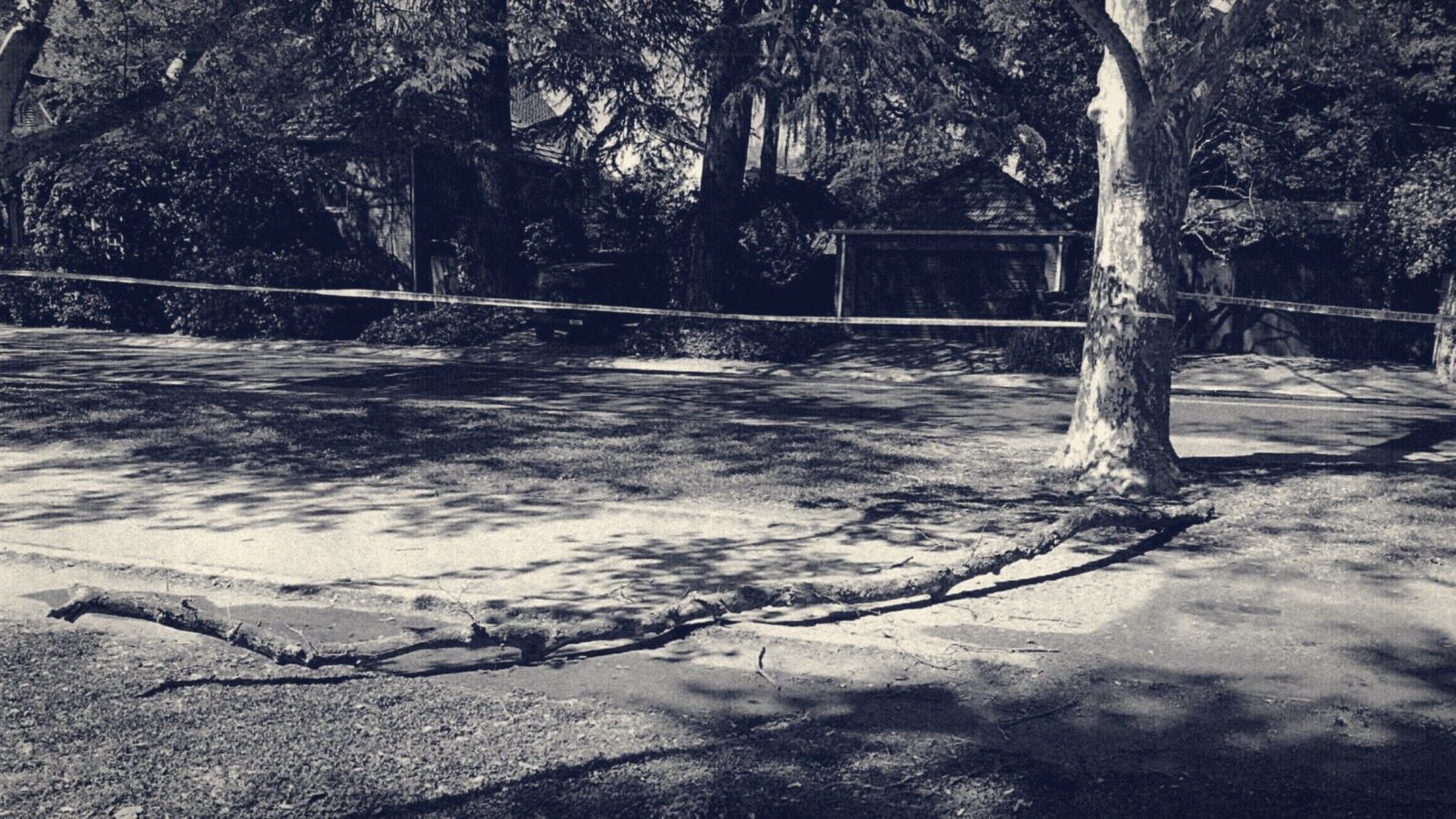
In April 2020, a dead limb fell from a City of Sacramento tree onto a man jogging in McKinley Park. In May 2024, a jury found the City liable. On October 9, 2026, after a separate nine-day trial on damages, Sacramento Superior Court Judge Steven M. Gevercer awarded him $33,320,233.21. The court file shows the City did not argue immunity at trial. The whole case came down to one question: should the City have found the dead limb before it fell?
Under California law, a city park is public property like a sidewalk or a road, and the same dangerous-condition rules apply. Here is what the court record shows about how this case was won, and what it means for anyone hurt in a public park.
What happened
On April 21, 2020, at about 2:15 in the afternoon, Michael Flynn was running on the jogging path on the north side of McKinley Park in East Sacramento. He was 28, an MIT graduate finishing a Ph.D. in theoretical physics at UC Davis. A branch about 30 feet long and 5 inches thick broke off a City-owned London plane tree, where it was attached about 30 feet above the ground, and struck him on the head.
According to the court's damages decision, he suffered multiple skull and facial fractures, bleeding in and around the brain, a severe traumatic brain injury, and fractures in his neck and mid-back. Surgeons removed part of his skull to relieve pressure on his brain, and it was not replaced for more than four months. He spent nine days in the hospital and left needing around-the-clock care. He finished his doctorate in 2021 and now works for a quantum-computing company, but the court found the injury reduced his ability to perform, and earn income, in his field.
He sued on September 18, 2020 (Flynn v. City of Sacramento, Sacramento Superior Court No. 34-2020-00285390). The case originally also named West Coast Arborists, Inc., the contractor that pruned the City's park trees. Before trial, the parties stipulated that the contractor's last work on the tree, on May 5, 2016, was competently done, that the limb was healthy at that time, and that any duty to inspect the tree after that date belonged to the City alone. The contractor was dismissed before trial.
How the case was tried
Liability went to a jury first. The parties agreed to bifurcate the trial: a jury would decide whether the City was liable, and damages would be tried later only if the City lost. In its trial brief, the City conceded that it owned the tree, that the dead branch was a dangerous condition, and that it created a foreseeable risk of this kind of injury. It also conceded it had no actual notice. In the City's words, "this liability case comes down to notice."
The City's defense was that it had no reason to know about the limb:
- About 25,000 of the City's trees are in parks, including roughly 500 in McKinley Park. The Parks Department has no dedicated pruning staff and contracts that work out.
- The City aimed to prune every tree every five to seven years. This tree was last pruned three years and ten months before the accident.
- The Parks arborist believed he had visually inspected most, if not all, park trees over four months in 2018 to build a pruning schedule.
- London plane trees lose their leaves in fall. The City argued a dead branch is hard to spot in winter and becomes apparent only once the tree leafs out.
- McKinley Park is heavily used, and no one ever reported the limb.
- Inspecting all park trees twice a year, as Flynn's experts proposed, was in the City's words "fiscally impossible" and "not mandated by a single industry standard."
The stipulated facts cut the other way. City maintenance workers were in McKinley Park every day, but the parties agreed it was not part of their jobs to inspect trees or look for dead limbs. The City was unaware of any employee inspecting this tree between the May 2016 pruning and the accident. The experts agreed the limb was dead when it fell, though none could date when it died. The City said both sides' experts thought it could have died within the year before. Flynn's lawyers say the evidence showed it had been dead "at least 18 months, and likely nearly three years." According to Flynn's lawyers, City records also showed that virtually all service requests about dangerous limbs in the park came from residents, not City employees. "They were actually relying on users of the park to report problems," attorney Robert Buccola told CBS Sacramento.
The jury was instructed on only four substantive rules: the elements of a dangerous-condition claim, the definition of a dangerous condition, notice, and inspection systems (CACI 1100, 1102, 1103 and 1104). During deliberations, the jury sent out a question asking how an inspection system related to notice for verdict question 5. The court answered: "Question Five of the Verdict Form relates to the second paragraph of Instruction 1103. Instruction 1104 provides a factor the jury may consider in deciding if the notice defined in the second paragraph of Instruction 1103 has been established by the evidence."
On May 29, 2024, the jury answered "yes" to all five questions on the special verdict form. The fifth asked: "Did the City of Sacramento have notice of the dangerous condition for a long enough time for City of Sacramento to have protected against it?"
A judge decided damages. Flynn waived a jury for the damages phase, and Judge Gevercer held a nine-day court trial from August 24 to September 3, 2026. His written decision, filed October 9, awards:
- Economic damages: $8,320,233.21. Past medical expenses $181,748.88 and future medical expenses $200,000 (both stipulated), past lost earnings $277,083.33, and future lost earning capacity $7,661,401.
- Non-economic damages: $25,000,000. Past $7,500,000 and future $17,500,000.
- Total: $33,320,233.21.
The court did not give Flynn everything he asked for. His lawyers sought $569,600 in past lost earnings and $17,025,000 in future lost earning capacity, based on a career in artificial intelligence and quantum computing research at top technology companies. The court found it "possible, but not reasonably probable," that he would have been hired directly into one of the highest-paying firms out of a postdoctoral fellowship. It also found bonuses and stock options too speculative. The court instead measured his loss as the difference between a $205,000 starting salary with annual raises and two-thirds of what he earns now. On pain and suffering, the City argued that $3 million to $6 million was appropriate. The court found that his brain injury was a substantial factor in his current condition and awarded $25 million.
Some news coverage described a $33 million jury award. The court record shows the jury decided liability in 2024, and the judge set the amount in 2026.
It is not over. The decision directs Flynn's lawyers to prepare a judgment and allows prejudgment interest "to the extent permitted by law." Once judgment is entered, the City can still move for a new trial or appeal. In a statement, City Manager Maraskeshia Smith called it a "tragic incident." She did not say whether the City has changed how it inspects park trees.
What California law says
Dangerous condition of public property. Under Government Code section 835, a public entity is liable for an injury caused by a dangerous condition of its property if the condition created a reasonably foreseeable risk of that kind of injury, and either (a) an employee's negligence created the condition, or (b) the entity had actual or constructive notice of it in time to protect against it. A "dangerous condition" is one that creates a substantial (not minor or trivial) risk of injury when the property is used with due care in a foreseeable way (Gov. Code § 830(a)).
Constructive notice is the whole fight in most tree cases. Few tree-fall cases involve a prior complaint about the specific tree. Under Government Code section 835.2(b), a public entity has constructive notice if the condition existed long enough, and was obvious enough, that the entity should have discovered it and its danger through due care. The statute makes two kinds of evidence admissible on that question:
- Whether a reasonably adequate inspection system would have found the condition. "Reasonably adequate" is measured by weighing the practicability and cost of inspection against the likelihood and magnitude of the danger.
- Whether the entity actually maintained and operated such a system with due care and still missed it.
The McKinley Park trial shows how that plays out. The City's case was about scale and cost: 25,000 park trees, a five-to-seven-year pruning cycle, and no industry standard requiring more. Flynn's case was that the limb had been dead long enough to see, that City employees were in the park every day, and that none of them were assigned to look up. The jury's question during deliberations shows that the inspection-system instruction was central to its decision.
The immunities that were not raised. Public entities have immunities that private landowners do not, and two come up in many park-tree cases. By trial, the City was not relying on either one. Its trial brief said: "There do not appear to be any disputes of law."
- Trail immunity (Gov. Code § 831.4) protects public entities from injuries caused by a condition of a recreational trail, and courts have applied it to paved park paths (Amberger-Warren v. City of Piedmont (2006) 143 Cal.App.4th 1074). But in Toeppe v. City of San Diego (2017) 13 Cal.App.5th 921, where a eucalyptus branch fell on a woman in Mission Bay Park, the Court of Appeal held it did not apply: "this is not a case about trails. It is about trees."
- Natural-condition immunity (Gov. Code § 831.2) covers natural conditions of unimproved public property. Courts have fought over how much development makes land "improved" (County of San Mateo v. Superior Court (2017) 13 Cal.App.5th 724; Meddock v. County of Yolo (2013) 220 Cal.App.4th 170). A fully developed city park with paths, a garden and arts center, and a daily maintenance crew is not a natural landscape.
No cap on non-economic damages. California's MICRA limits on non-economic damages apply to claims against health care providers, not to dangerous-condition claims against public entities. That is why the court could award $25 million for pain and suffering. A public entity cannot be ordered to pay punitive damages (Gov. Code § 818).
What this means if you are hurt in a public park
A park injury claim against a city, county or the State follows the Government Claims Act, not the ordinary rules for suing a private property owner.
- Six months to present a claim. A written claim for personal injury or wrongful death must be presented to the public entity within six months after the cause of action accrues, which is usually the day of the injury (Gov. Code § 911.2). See our post on the "Rule of Six". If the claim is rejected, a lawsuit generally must be filed within six months after written notice of the rejection (Gov. Code § 945.6).
- New signature rule in 2027. Starting January 1, 2027, the claim must be signed with a declaration that, on information and belief, its contents are true and correct. See our post on AB 2529.
- The limb will not wait for you. In the Flynn case, the City's arborist photographed the scene and then called the contractor to haul the branch away. At the time, the City had no policy of keeping large limbs that fell from trees. Photograph the limb, the break point, the tree and the canopy above the path before it is removed. Ask the city in writing, right away, to preserve the limb and the tree's records.
- Get the records that show who was supposed to look. In Flynn, the decisive facts were about job duties: who was in the park every day, and whether anyone was assigned to look for dead limbs. Ask for the pruning schedule, contractor work orders, arborist inventories, service requests and the job descriptions of park staff. Much of this can be requested under the California Public Records Act (Gov. Code § 7920.000 et seq.).
- Old photographs matter. The City's arborist expert planned to rely on years of Google Street View images to argue the limb had been healthy. Flynn's side hired a forensic imaging expert to rebut him, and the City dropped that evidence before trial. Historical street-level and aerial imagery can help either side date a dead limb, so it should be collected early.
- Get witness names early. Other park users may have noticed the limb before it fell. That is evidence of how long the danger was visible.
- Expect a long road. Flynn was hurt in April 2020, won on liability in May 2024, and received his damages award in October 2026, with judgment and any appeal still to come.
Can you sue a city if a tree branch falls on you in a park?
Yes, if the tree was a dangerous condition and the city created it or had actual or constructive notice of it in time to act (Gov. Code § 835). You must first present a written claim to the city within six months of the injury.
What if no one ever reported the tree to the city?
That does not end the case. In McKinley Park, the City stipulated that no one had reported the tree, and it still lost. Constructive notice asks whether the city should have discovered the hazard through a reasonably adequate inspection system (Gov. Code § 835.2(b)).
Does it matter that I was on a trail or path when the branch fell?
A city may argue trail immunity. Under Toeppe v. City of San Diego, though, a falling branch is a condition of the tree, not the trail, and trail immunity did not bar that claim. In the Flynn case, the City did not argue immunity at trial.
Sources
Court record, Flynn v. City of Sacramento, Sacramento Superior Court No. 34-2020-00285390
- City of Sacramento's Trial Brief (May 17, 2024)
- Stipulation Regarding the Inspection and Maintenance of Subject Tree (August 2023, filed May 17, 2024)
- Stipulation to Exclude the Use of Google Street View Photographs (filed May 17, 2024)
- Jury Instructions; Response to Jury's Question #1; Special Verdict Form (May 28–29, 2024)
- Verdict After Court Trial (October 9, 2026)
- Cover photo: City of Sacramento arborist's scene photograph, April 21, 2020, filed as Exhibit A to Plaintiff's Opposition to Defendant's Motion in Limine No. 3 (May 17, 2024)
News coverage
- Man injured in 2020 fallen tree limb at McKinley Park awarded $33 million by jury, CBS Sacramento, October 15, 2026
- Jury awards $33 million to man hit by falling tree limb while jogging in park, KCRA via Gray Media, October 16, 2026
- Record $33.3 Million Verdict Against City of Sacramento in McKinley Park Tree Accident, Dreyer Babich Buccola Wood Campora LLP, October 15, 2026
Law
- Toeppe v. City of San Diego (2017) 13 Cal.App.5th 921
- Amberger-Warren v. City of Piedmont (2006) 143 Cal.App.4th 1074
- County of San Mateo v. Superior Court (2017) 13 Cal.App.5th 724
- Meddock v. County of Yolo (2013) 220 Cal.App.4th 170
- Government Code § 818, § 830, § 831.2, § 831.4, § 835, § 835.2, § 911.2, § 945.6
Talk to Kocaj Law
Kocaj Law, P.C. handles injury and wrongful death claims against California cities, counties, the State and other public entities, including cases involving falling trees, dangerous sidewalks, roads and public parks. We prepare government claims to meet every requirement of the Claims Act, and we move quickly to preserve the physical evidence and the agency's records. Consultations are free. Learn more at kocajlaw.com.
Disclaimer: This commentary is provided for informational purposes only and does not constitute legal advice or commentary on any specific pending case. No attorney-client relationship is formed by reading this content. Past results do not guarantee future outcomes.
Free consultation
If this headline feels personal, talk with Kocaj Law before evidence disappears.
Serious freeway crashes move quickly from emergency response to insurance defense. Our firm can help preserve video, identify every responsible party, and explain your options with no upfront fee.